
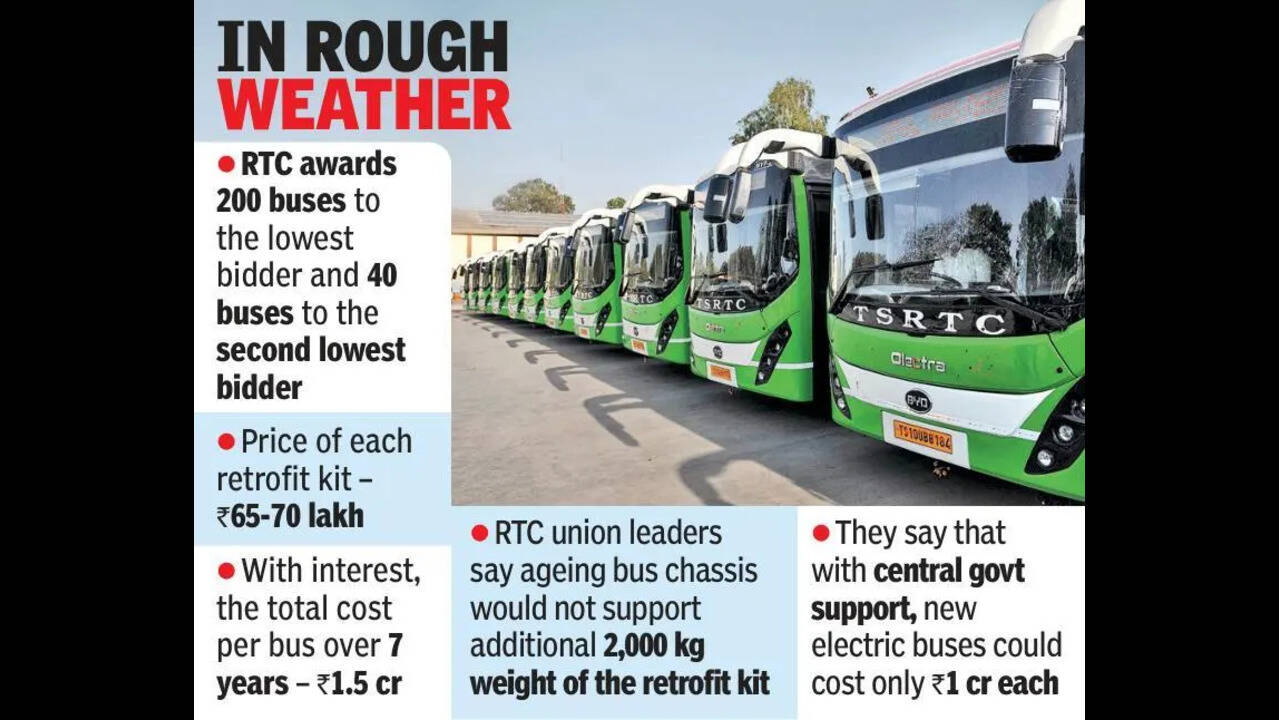
RTC’s Ambitious Electric Conversion Plan
The Road Transport Corporation (RTC) is embarking on a significant initiative to transition its fleet to electric buses. This move is aimed at promoting sustainable transportation and reducing the carbon footprint. However, the plan has sparked a debate over its financial implications and safety measures.
Cost Implications of the Electric Conversion
One of the primary concerns surrounding RTC’s electric conversion plan is the associated costs. The upfront investment required to purchase electric buses and install necessary charging infrastructure is substantial. Critics argue that these expenses could divert funds from other essential public transport services.
Budget Allocations and Financial Viability
Financial analysts suggest that the RTC may need to reassess its budget allocations to accommodate this transition. While electric buses promise lower operational costs in the long run, the initial financial burden could impact service quality if not managed properly.
Safety Concerns Regarding Electric Buses
In addition to financial worries, safety issues have been raised regarding the use of electric buses. Stakeholders are questioning the reliability of electric vehicle technology, particularly in adverse weather conditions. Ensuring that these buses can operate safely in all environments is critical for public confidence.
Public Perception and Trust
Public trust in RTC’s ability to implement this transition safely is paramount. The corporation must address these concerns by providing transparency about safety protocols and the technology used in the electric buses. Engaging with the community and stakeholders can help build confidence in this initiative.
Environmental Impact and Long-term Benefits
Despite the challenges, the push for electric buses is largely seen as a positive step towards environmental sustainability. Electric vehicles produce zero emissions, contributing to cleaner air and a healthier environment. Furthermore, as technology advances, the cost of electric buses is expected to decrease, making them a more viable option for public transport.
Future of Public Transportation
The transition to electric buses is a crucial element in the future of public transportation. It aligns with global trends towards electrification and sustainability. However, the RTC must navigate the complexities of cost, safety, and public perception to ensure a successful transition.
Conclusion
In conclusion, while RTC’s electric conversion plan presents promising environmental benefits, it is accompanied by significant financial and safety concerns. A balanced approach that prioritizes both sustainability and public safety will be essential for the success of this initiative.
What are the main concerns about RTC's electric bus plan?
The main concerns include high costs and safety issues related to electric bus technology.
How will the RTC fund the electric conversion?
The RTC may need to reassess its budget allocations to fund the electric conversion effectively.
What are the environmental benefits of electric buses?
Electric buses produce zero emissions, contributing to cleaner air and reducing the carbon footprint.