
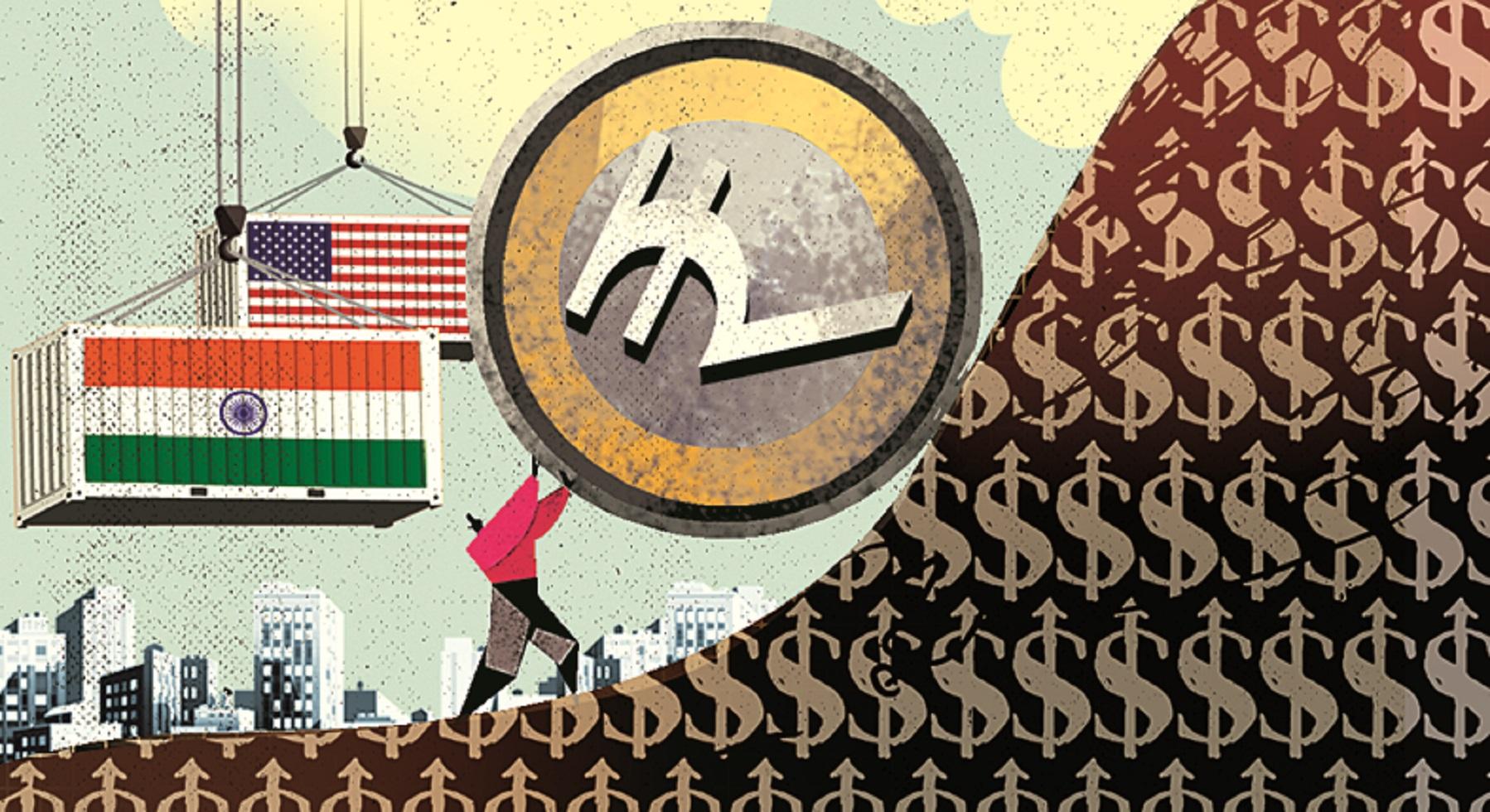
Indian Rupee Hits Record Low Amidst Global Tensions
The Indian Rupee has recently plunged to a new record low against the US dollar, largely influenced by escalating conflicts in the Middle East, particularly the war in Iran. This dramatic shift has raised concerns among investors and economists about the future stability of the currency.
Factors Contributing to the Rupee’s Decline
Several factors contribute to the current depreciation of the Indian Rupee. The ongoing geopolitical tensions have led to increased volatility in global markets, affecting foreign investment flows. Additionally, the rising prices of crude oil due to supply disruptions have put further pressure on the Indian economy.
Impact of Global Oil Prices
As India is heavily reliant on imported oil, any increase in global oil prices directly impacts the Rupee’s value. With the conflict in Iran threatening oil supply chains, the cost of crude has surged, thus exacerbating inflationary pressures within the country.
Investor Sentiment and Market Reactions
Investor sentiment towards the Indian economy has also been affected. The uncertainty surrounding the geopolitical situation has led many investors to seek safer assets, further causing the Rupee to weaken. This trend has raised fears about the Rupee potentially reaching the 100 mark against the US dollar, a scenario that could lead to economic instability.
Economic Forecast: What Lies Ahead?
Economists predict that if the current geopolitical tensions persist, the Rupee may continue to decline. However, they also suggest that the Indian government must implement strategic measures to stabilize the currency. These measures could include enhancing foreign exchange reserves and regulating imports to minimize the trade deficit.
Policy Recommendations
To combat the effects of the weakening Rupee, policymakers may need to consider various strategies. Strengthening diplomatic relations to ensure stable oil supply and maintaining robust foreign reserves are critical steps. Additionally, proactive fiscal policies could help cushion the economy against external shocks.
Conclusion: The Future of the Indian Rupee
While the current situation poses significant challenges, proactive measures from the government can help mitigate the impacts on the Indian Rupee. However, continuous monitoring of global events and market reactions will be crucial for the currency’s recovery.
For more insights on economic trends, visit our Economy section for in-depth analysis and updates.
What caused the Indian Rupee to drop in value?
The drop is primarily due to geopolitical tensions in the Middle East and rising oil prices.
Will the Indian Rupee reach 100 against the US dollar?
If current trends continue, it is a possibility, but government measures could stabilize it.
What can be done to stabilize the Indian Rupee?
Strengthening foreign reserves and implementing effective fiscal policies are key strategies.